The programme’s complexity was further heightened by its proximity to other major National Highways schemes across the region. Strategic traffic management planning was essential to avoid clashes with concurrent works while ensuring the A63 remained safe and operational throughout the works.
Alongside the core construction works, the McCann team also delivered a wide range of community and environmental initiatives, reinforcing the project’s commitment to social value and long‑term local benefit.
Maximising road-space efficiency
A key element of the approach was maximising road space efficiency and traffic management in a heavily constrained road‑space environment. McCann worked with National Highways to bundle additional activities, including vegetation clearance, fencing upgrades, slip‑road resurfacing and road‑marking renewals, into the traffic management plans. This reduced the need for future closures, minimised disruption to road users and delivered long‑term asset efficiency, something particularly important as the works coincided with several nearby nationally significant projects, including the £500 million A63 Castle Street Improvement Scheme, the A614 Jock’s Lodge works and the M62 Ouse Bridge programme.
By combining multiple asset upgrades under a single traffic management strategy, McCann eliminated the need for future closures, generating cost savings for National Highways and reducing inconvenience to the travelling public.
Effective stakeholder engagement
Early and continuous stakeholder engagement was central to successful delivery of the project. Weekly face‑to‑face meetings, led by National Highways’ Lean Team, ensured all parties were on the same page on risks, priorities and progress, supporting rapid decision‑making as issues emerged. McCann’s approach received praise from Lynn Mellon, Quantity Surveyor (Yorkshire & North East) at National Highways “This scheme has demanded not only technical expertise but also a collaborative and proactive approach to problem-solving. Patrick and Andy [of J McCann & Co.] rose to this challenge with professionalism, demonstrating leadership on site, clear communication, and a consistent drive to deliver quality results under pressure.
The execution on site has reflected the values they uphold at J McCann —integrity, respect, and a commitment to excellence. It is evident that both Patrick and Andy take immense pride in their work, and their efforts have not gone unnoticed. The quality and safety of the work delivered are a direct reflection of their hands-on leadership and the strength of the team around them.”
Anticipating the unexpected
McCann’s approach was particularly important given unforeseen site conditions that added further complexity. Uncharted underground services, including unrecorded cables, and areas of hard ground posed risks to both progress and safety. Incomplete elements of the design required McCann to adapt quickly, making proactive adjustments on site to maintain momentum and protect the May 2025 completion target.
To mitigate the risks associated with unknown services, McCann deployed vacuum excavation and advanced surveying techniques, achieving zero service strikes despite challenging ground conditions. A recurring flooding hotspot west of the South Cave Interchange periodically restricted access; flooding risks were proactively managed through the mobilisation of jetting units to maintain and clear defective drainage systems, keeping the site accessible during adverse weather.
Efficiency through innovation
The risk to the programme from materials with long lead-in times was mitigated through innovation. Column foundation sleeves and associated civils were installed in advance of final column deliveries, allowing works to progress without delay. Similarly, early installation of ducting, chambers and Distribution Network Operator connections de‑risked later stages of the programme.
Daily briefings, toolbox talks and strict permit and closure‑share systems ensured accountability and consistency across McCann’s teams and all supply chain partners. Balancing these risks while managing stakeholder expectations required strong leadership, transparent communication and a relentless focus on planning and safety.
An environmental and social legacy
The transition to LED lighting has reduced energy consumption by approximately 65%, contributing directly to National Highways’ carbon‑reduction objectives and lowering long‑term maintenance requirements.
Alongside the infrastructure works, McCann delivered a broad programme of social value interventions, leaving a lasting positive legacy for local communities.
- McCann refurbished a deteriorated outdoor play area, renewing surfaces and installing new fencing in collaboration with GVA to create a safe and secure space for children for South Cave Kids Club.
- McCann donated laptops for an after‑school homework club, alongside books, toys and high‑visibility equipment at South Cave Kids Club.
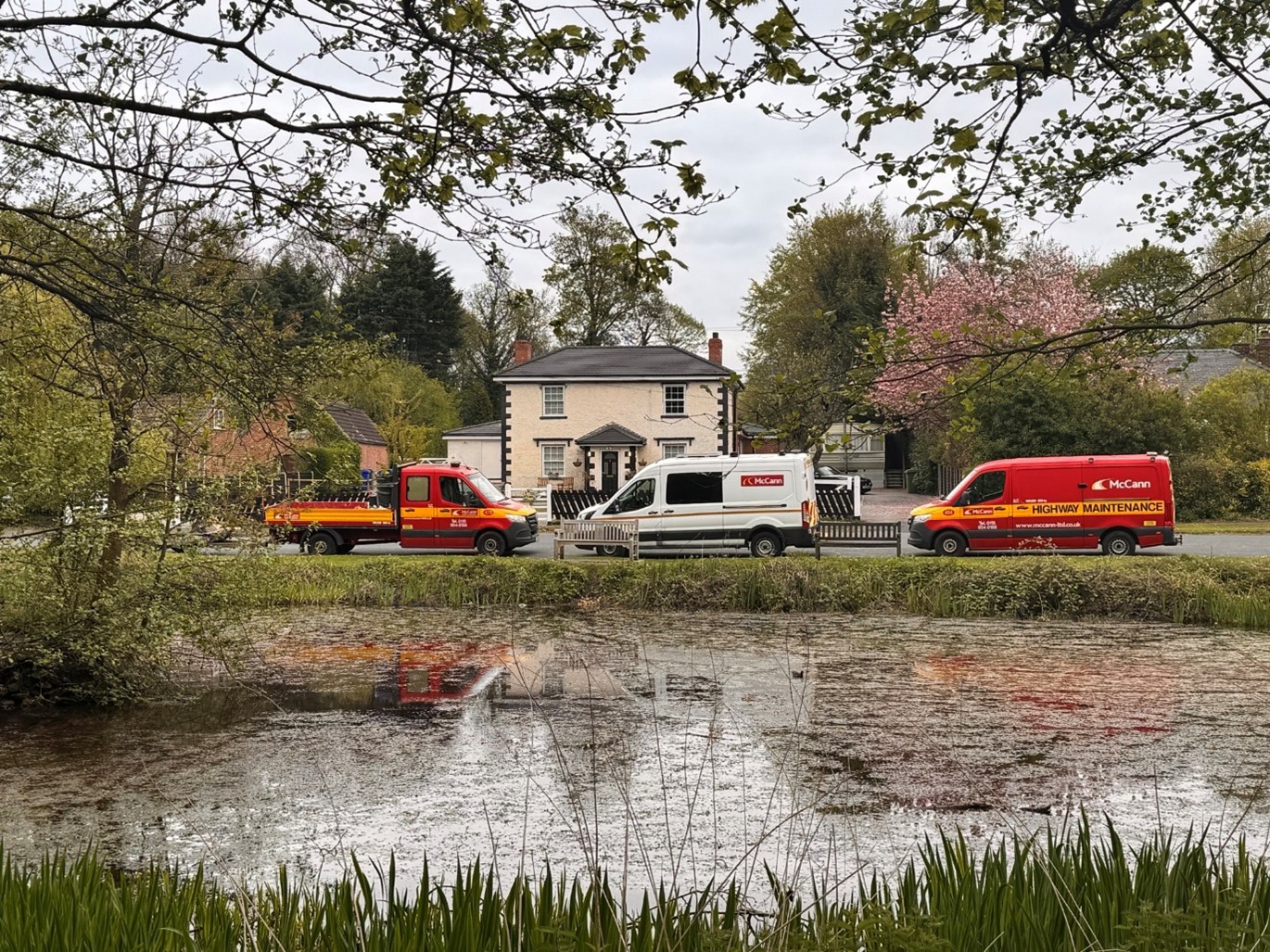
- At Melton Pond, our teams restored wildlife areas through clearance and maintenance, installing over 1,000m² of geo‑membrane and mulch to protect ecosystems. Cycleways were resurfaced, and traffic‑calming measures were introduced to improve pedestrian and cyclist safety.
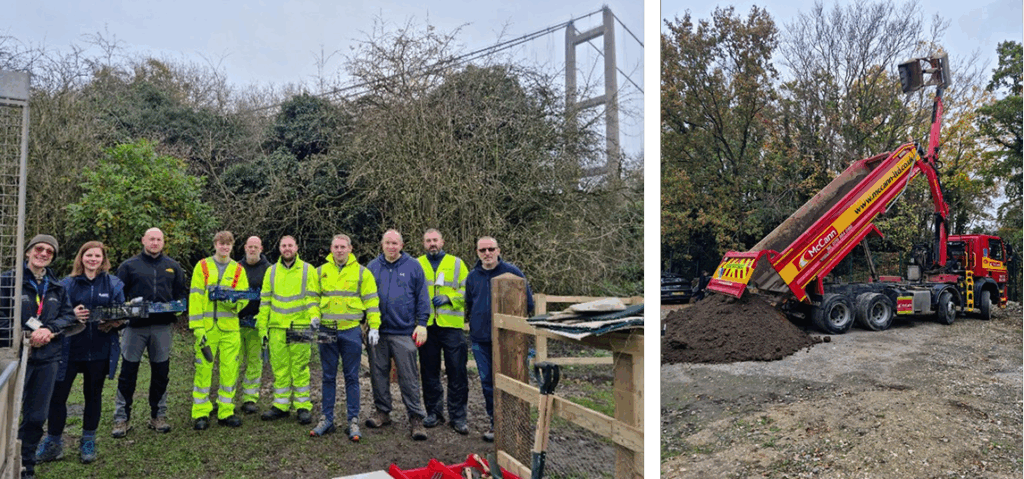
- At Humber Country Park, McCann employees volunteered alongside delivery partners to carry out bulb planting, footpath edging and general maintenance, including the donation of 20 tonnes of topsoil to rejuvenate flowerbeds.
- McCann supported food security by donating to Trussell Trust foodbanks in Knottingley and Beverley.
- Backed grassroots sport through planned improvements at South Cave Football Club.
Delivering Safer Roads and Stronger Communities
The A63 VRS & Lighting Replacement Scheme exemplifies McCann’s ability to deliver large‑scale, technically complex highway upgrades as Principal Contractor while maintaining uncompromising safety standards, programme certainty and strong stakeholder relationships. Through proactive risk management, innovative construction techniques and a firm commitment to social value, McCann has not only modernised a vital route but also delivered long‑term benefits for road users, local communities and the environment.
The scheme stands as a strong example of how collaborative working, adaptability and safety‑led leadership can successfully overcome the challenges inherent in live network infrastructure delivery.