Scope of Works:
Street Lighting:
- 238 x Road Lighting Columns
- 51,548m x Trenching, Cabling and Ducting
- 14 x Feeder Pillars
- 115 x Chambers
- Associated electrical works, terminating and testing for street lighting
Communications Technology:
- Site Clearance – Removal of existing street lighting, traffic signal posts, roadside equipment, signs, technology mast and posts, feeder pillars, cabinets, chambers, and cabinet-mounted technology equipment
- 30,778m x Trenching, Cabling and Ducting
- 172 x Chambers
- 379 x Terminations
- 9 x Emergency Roadside Telephone (ERT), Environmental Sensor Stations (ESS), Motorway Incident Detection and Automatic Signalling (MIDAS)
- 62 x Cabinets
- 4 x Loop Detector Installation
- Gantry signage, cabling and connection
- 3 x Feeder Pillars
- 24 x Retention Sockets
- 55 x Inductive Loop Systems
Additional scope under this contract included:
- 3 x ANPR (Automatic Number Plate Recognition) Cameras and associated cabinet sites
- 5 x 15m PTZ (Pan-Tilt-Zoom) cameras and mast incl. cabling/commissioning
- 37 x HSM/ERA (High Speed Motorways/Emergency Refuge Areas) Cameras incl. cabling and commissioning
- 1040m x Class 3 handrail and infill panels
- 2 x FRC Sign bases
- Rebuilding the monument and paving for the local Gaelic football club
- Decorative lighting on the A45 footbridge, incl. new feeder pillars and ducting
- 5 x Power cabling to FTMS (Fixed Text Message Signs)
- 95 x Lighting on new gantries incl. cabling, testing and commissioning
- 1200m x DNO ducting to supply the new pumping station feeder pillars
- Numerous Slab on edge locations
- Installation of cable troughing to tie into the existing network
Kerbs, Footways & Paved Areas:
- 26,960m x Precast concrete kerbs, drainage kerbs and edging
- 5,780m2 x Footways and paving for pedestrian crossings and maintenance access
- 10 x Construction of farm access, including earthworks, edgings and type 1
Additional Scope under this scheme included:
- 6 x Installation of bridge deck kerbs, poured concrete verges on bridge decks, installation of revetment pathing under bridge decks, reinforced concrete works
- 3 x Pumping stations – installation of duct work, construction of kiosk bases, tanker hard-standing spaces, reinforced concrete works, and palisade fencing and steel access covers to valve chambers and rising main
- 4 x Installation of maintenance access steps for the bridges
- 4 x Installation of grasscrete paving laybys for maintenance vehicles
- 530m x additional footpath incl. removing the old footpath, cut/fill earthworks, kerb and stone up

Programme and Delivery
From the beginning, we embedded ourselves as part of a collaborative team, engaging in weekly planning and programming sessions with Skanska and other subcontractors. This collaborative environment enabled proactive sequencing changes and the early identification of potential issues. The project’s dynamic requirements meant that key dates often shifted, but McCann consistently adapted to meet each revised milestone.
One of the most successful innovations came from McCann’s proposal to change the construction method for footpaths. The original plan used paving on Type 1 and sand, but our team suggested laying paving directly on concrete. Not only did this allow us to continue work in wet conditions, but it also increased durability and accelerated the programme. The change was approved by Skanska and implemented across the scheme.

Material selection and procurement strategies were also adjusted mid-project to address long supplier lead times, helping to maintain momentum on site.
Quality standards remained high throughout the works, with only three minor defects raised throughout the project. One damaged duct was replaced quickly, and a handful of lantern socket units needed a small modification to accommodate the LCU plug. A third issue involved a kerb line that fell out of tolerance due to the unexpectedly deep concrete bed specified in the design, which required replacement but was recognised as a shared design issue by Skanska. These were swiftly resolved with minimal downtime.
The challenges of working on a live motorway and around key infrastructure were ever-present. Many of the works took place during night closures, requiring precise coordination with Skanska’s traffic management teams. Despite this, our team remained consistent throughout both packages, bringing collaboration, continuity, quality, and responsiveness across the full contract.
Health, Safety and Environmental Considerations
The project recorded no serious incidents over its multi-year duration. With strict safety protocols in place, especially near Birmingham Airport, where lifting operations required specific permits, the site remained well-controlled and safely segregated from public areas and live traffic.
Environmental considerations were a critical part of the delivery. The scheme required careful working near ancient woodland, badger setts, and protected newt habitats. McCann followed all protocols and was commended for our response in handling of the Newts, after pausing work to allow Skanska’s environmental team to respond and relocate species where necessary. Sustainable working practices were also followed, with all waste controlled through Skanska’s waste streams, on-site material reuse, and the use of HVO fuel to reduce CO₂ emissions. McCann also provided monthly carbon and materials usage reports for sustainability tracking.
Above and Beyond
While Skanska managed direct public liaison efforts, McCann supported local communities in other ways. Surplus cable drums were donated to Birmingham Dogs Home to support their exercise and utility area, once the street lighting element of our contract was completed.

Additionally, throughout the project, various McCann operatives were awarded Skanska’s monthly on-site Observation of the Month award for outstanding performance. In late 2024, Skanska’s Project Manager, Paul Chambers, awarded Gabriel Nistor and Wayne Morris the Star Award for rejecting a digging permit that had incorrect information and didn’t follow proper procedures. Their actions reflected the safety-first approach emphasised in recent Skanska safety briefings, prioritising site safety over project deadlines.
In November 2025, HGV Operative Raymond Gordon received an award for going above and beyond his usual duties by arranging traffic management to temporarily close the road and removing fly-tipped rubbish using a grab lorry, after recording debris and waste along the verge, which affected the public and operational teams.

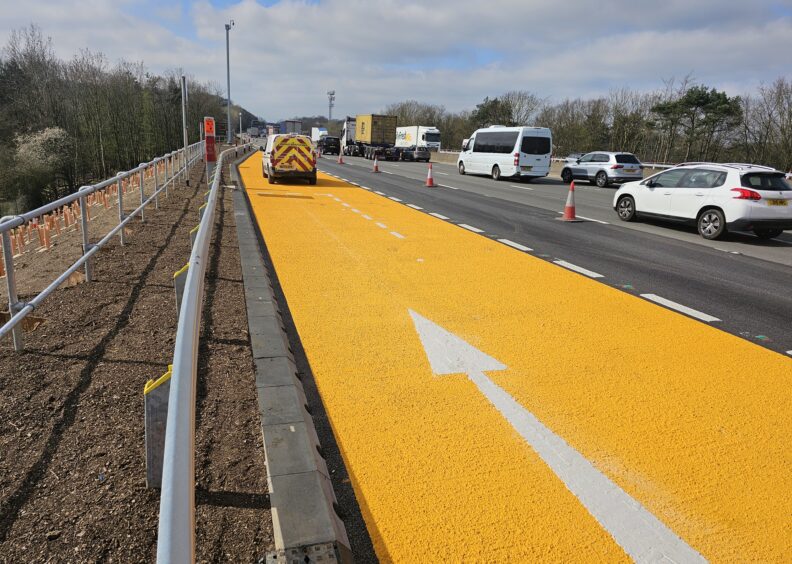
The M42 Junction 6 scheme significantly improves capacity, connectivity, and journey times in the region. McCann’s contribution spanning complex electrical, civil, and technology installations was delivered to a high standard despite programme and design challenges. The project brought together expertise, collaboration, environmental responsibility and practical innovation to deliver lasting infrastructure improvements. The M42 J6 scheme will serve millions of journeys in the years to come, and McCann is proud to have played a key role in making it happen.