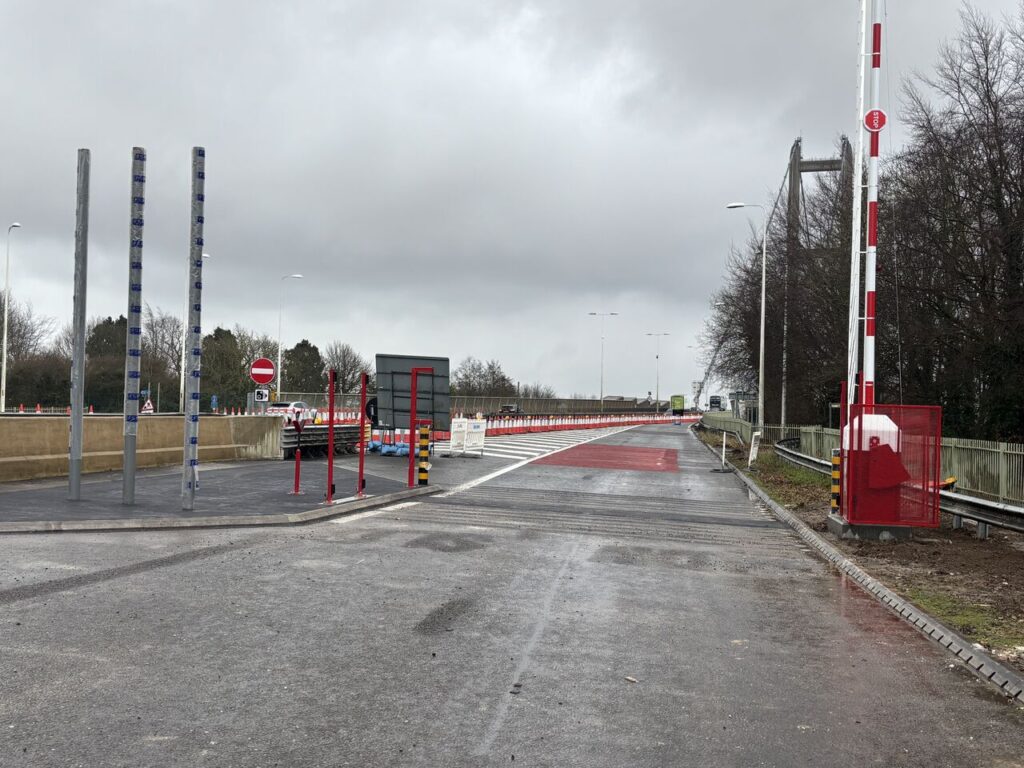
- 2 x automatic barriers with 8m long arm for abnormal load lane
- Line marking and Road Surfacing including coloured surfacing
- 150 linear metres of communication ducting
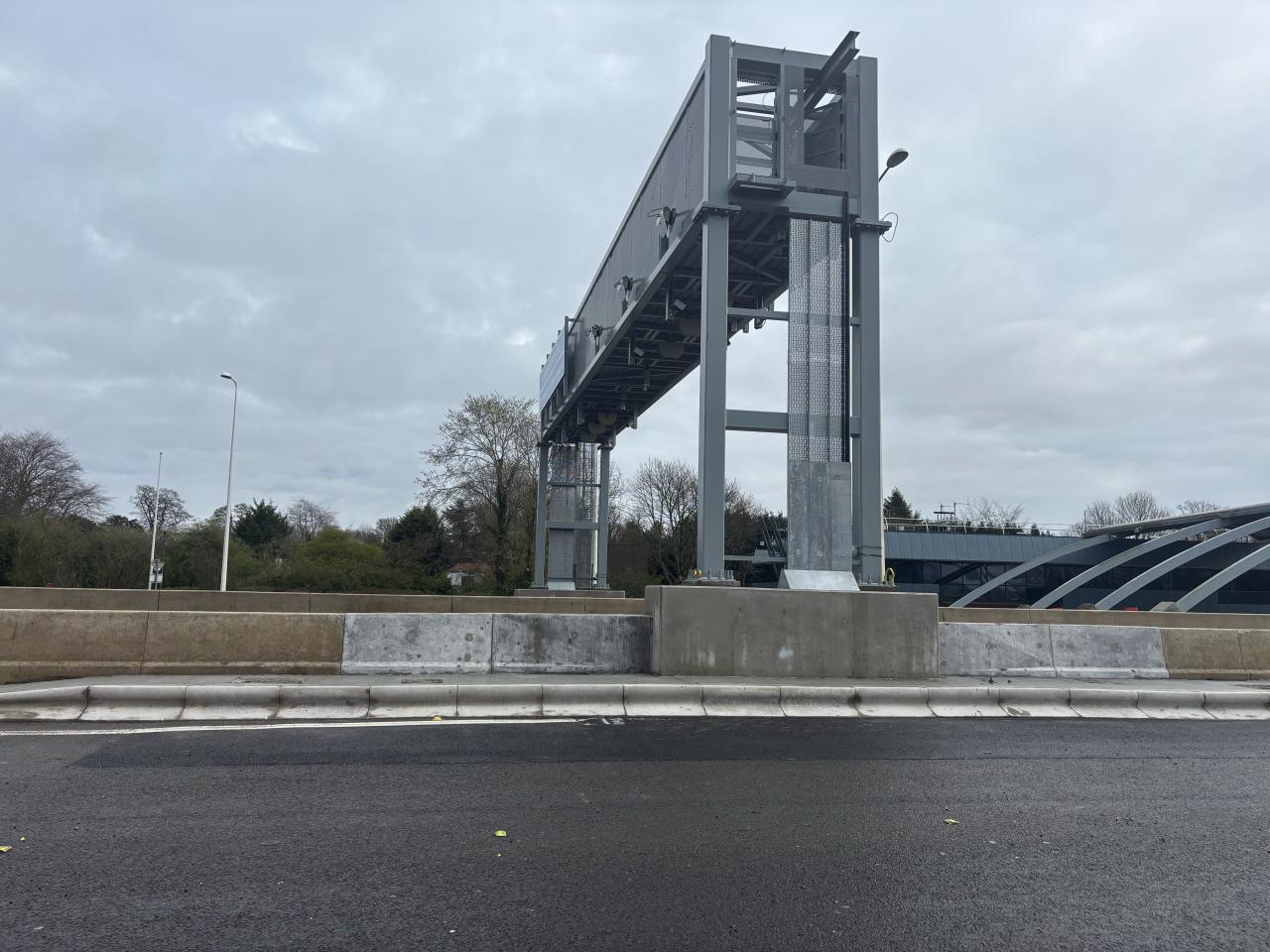
- Design for cabling to run through service tunnels enable powering of 2x communication cabinets in the Humber Bridge board office
- 11 chambers
- Flexible pavement / road surfacing
- 1000m power cabling and terminations/testing
- 3000m2 pavement re-surfacing
Ensuring the health and safety of personnel and the public
There were zero health and safety incidents over the lifecycle of this project. This was achieved working in a live operational environment adjacent to a 30 MPH road in a confined area, which presented considerable health and safety challenges. This included protecting members of the public from plant/people interface and our operational personnel from live traffic.
We worked in close collaboration with our specialist traffic management (TM) sub-contractor Roadway Traffic Management to implement an amendment of the running lanes and approach signage to ensure strict segregation of works, plant and equipment from the travelling public. Traffic management was designed and implemented to keep one toll booth operational at all times. We ensured the safety and well-being of our on-site personnel through:
- Chapter 8 compliant physical barriers, cones, and exclusion zone gates
- Site-specific Traffic Management Plan (TMP) developed in coordination with local authorities and overseen by our Traffic Safety Control Officer (TSCO) to maintain public safety and accessibility
- Only appropriately trained supervisory and operational personnel were deployed on site
- Mandatory site-specific inductions for all site personnel and visitors
- All site personnel are issued with appropriate PPE
- A bespoke Health and Safety Plan (HSP) incorporating risk registers, method statements (RAMS), Safe Systems of Work (SSoWs), emergency procedures and training matrices aligned
McCann Approach
Addressing stakeholder concerns
During the works, we received a noise complaint from a local resident. After consultation with the client’s project manager and our subcontractor partners, we took the decision to move nighttime works to daytime works (wherever TM requirements allowed), enabled by our flexible programming. We carried out letter drops to affected local residences and businesses ahead of potentially disruptive nighttime works.
We avoided any significant congestion on the local highways network through successfully delivering works within strict constraints. No more than two lanes of the eight-lane bridge (four northbound and four southbound) could be closed in either direction at any one time. Works were also delivered in off-peak hours (within school hours or nighttime works).
Challenges and solutions
One of the major challenges during our works was the potential for congestion disrupting the local highways network. Working collaboratively with Neology UK Ltd, we suggested a permanent formwork solution to reduce working space requirements and speed up construction works. This solution was approved by the Humber Bridge Board and delivered additional capacity for road users, reducing impact of carriage and cost.
Lessons learned
Our flexible programme and staff resourcing resilience enabled us to carry out additional, unprogrammed site investigations, to ensure appropriately qualified staff were assigned to deliver the works safely.
Sustainability / Recycling / Waste / CO2 innovations
We partnered with local suppliers for the required materials, including:
- Cemex UK Materials Ltd (Concrete).
- City Electrical Factors Ltd (Electrical).
- Civils & Lintels (Ducting and Kerbing).
- Keyline Civils Specialists Ltd (Timber).
- Ritherdon & Co Ltd (Cabinet Base).
This reduced associated CO2 emissions from long-distance deliveries and provided social value benefits of local business and employment opportunities. Accommodation for site personnel not local to the area was provided to reduce travel-related CO2 emissions.
Collaboration and partnering
The nature of the works required close and ongoing collaboration throughout the project lifecycle. Neology UK Ltd delivered technical elements of gantry works, including installation of traffic cameras and monitoring equipment, whilst McCann delivered concurrent civils works.
This required programme alignment and operational coordination, including McCann traffic management being delivered to accommodate Neology UK Ltd technical works. Weekly coordination meetings were held with Neology UK Ltd in our shared site office and welfare facilities in Humber Bridge Lorry Park.
The introduction of the Free-Flowing Tolling System marks a defining chapter in the evolution of the Humber Bridge, modernising its infrastructure to meet the demands of today’s road users. Acting as Principal Contractor, McCann successfully delivered complex civil and infrastructure works within a constrained, live highway environment, maintaining traffic flow while upholding the highest standards of health and safety. Through innovative construction solutions, responsive stakeholder engagement, and strong collaboration with Neology UK Ltd and supply chain partners, the project was completed efficiently and without incident. The result is a safer, more streamlined and future-ready crossing that improves the user experience, reduces congestion, and reflects McCann’s commitment to quality, sustainability and operational excellence in critical infrastructure delivery.