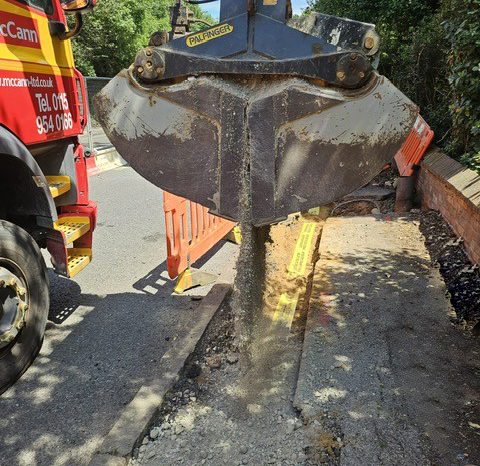
Low-Carbon Construction on the National Highways A52 Priory to QMC Scheme, saving over 6,000kg CO2e!
Through collaboration with Total Aggregates, McCann successfully introduced the UK’s first use of ReCO₂® hybrid aggregate on a National Highways SDF scheme, achieving savings over 6t CO₂e while maintaining programme and quality performance.
The A52 is an important route through the heart of the East Midlands. The stretch between the Priory roundabout and the Queen’s Medical Centre (QMC) roundabout is approaching the end of its serviceable life. Under the National Highways Scheme Delivery Framework (SDF), essential infrastructure upgrades are being carried out.
McCann’s work on this scheme involves the full replacement of street lighting infrastructure, associated ducting and cabling, as well as the installation of new illuminated bollards and feeder pillars, starting in May 2025 and ending in spring 2026. This work forms part of a broader initiative to create a widened, shared-use cycleway and footway to the eastbound side of the carriageway, increasing pedestrian and cyclist safety and enhancing the active travel routes in the area, which is home to the University of Nottingham, Queen’s Medical Centre (QMC), and Wollaton Hall and Park, all important landmarks in Nottingham.
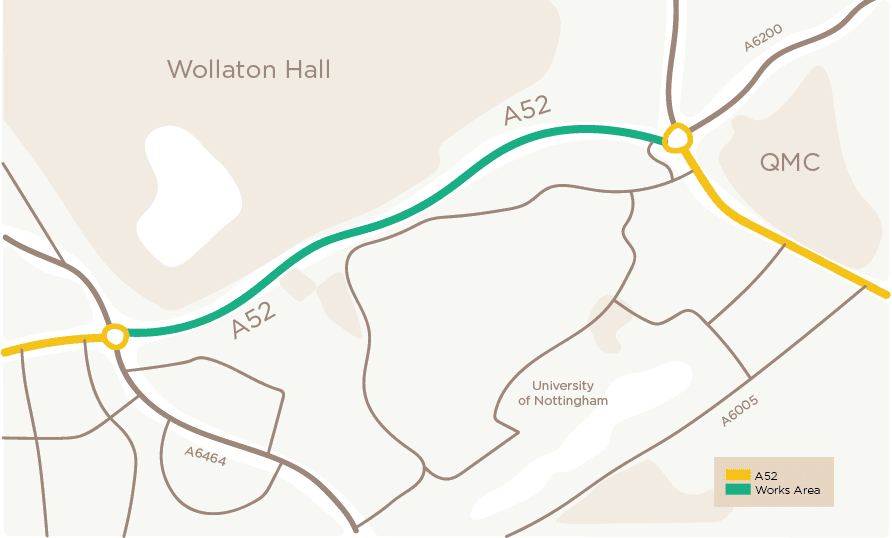
McCann took the opportunity to align the project with National Highways’ sustainability goals by introducing a low-carbon aggregate solution, ReCO₂®, marking the first use of this innovative product on an SDF scheme and saving over 6,000kg CO₂e for the scheme.
Sustainable Material Innovation ReCO₂® Hybrid Aggregate
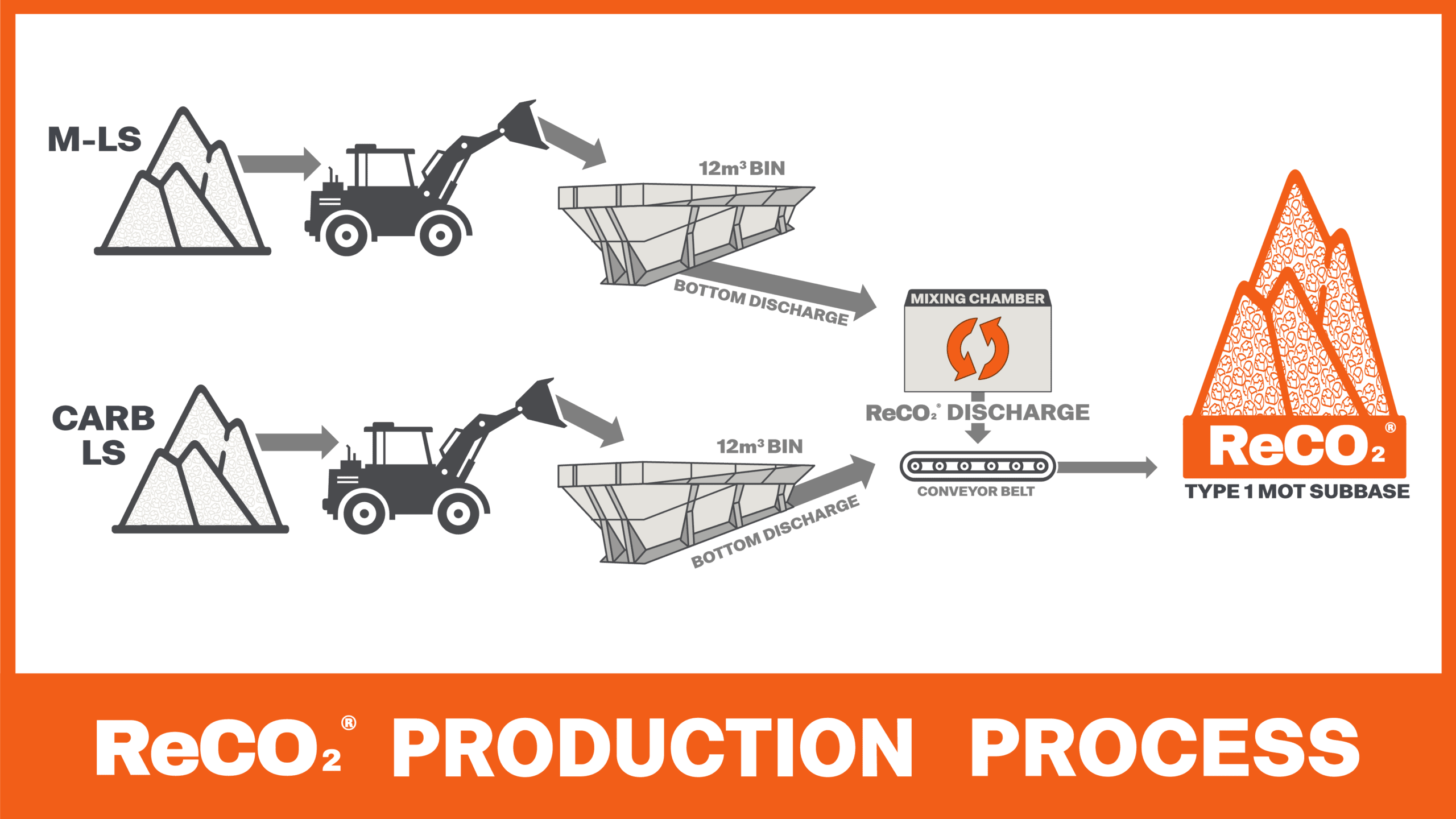
ReCO₂®, developed by Total Aggregates, is a hybrid construction aggregate designed to significantly lower the carbon footprint of any construction project.
It is a hybrid aggregate that combines O.C.O Technology’s Manufactured Limestone (M-LS) with high-purity carboniferous limestone (C-LS) in a 50/50 ratio to produce unbound aggregates that include waste materials and capture CO₂ emissions.
ReCO₂® boasts an independently verified GWP (Global Warming Potential) negative carbon emissions figure and reduces the reliance on primary aggregate. The negative value is achieved by actively consuming more CO₂ during its manufacturing process than it emits, providing a net environmental benefit. Its lower density means it also delivers greater ground coverage per tonne, reducing the total material required for a project.
Total Aggregates is an integrated supplier of aggregate, recycling, waste soil removal, restoration management and haulage contractor based within the Midlands and Yorkshire. After 20 years within the aggregates industry, they identified the need for a new, sustainable aggregate to reduce carbon emissions in the construction industry; thus, they developed and launched ReCO₂® hybrid aggregates.
Implementation and Approval
McCann first trialled ReCO₂® on internal sites, including our new depot at Lenton Lane and new housing developments under our sister company, Peter James Homes. Performance was monitored closely, with consistent results around compaction, handling, and finish. This built internal confidence in the material’s capabilities.
Recognising its potential, McCann initiated the approval process with National Highways for use on the A52 scheme. Presentations outlining carbon savings and technical compliance were delivered by the project team to National Highways’ delivery and design leads. Material specifications and test results were submitted, and the National Highways scheme delivery partner supported the material approval and formal integration into the contract works. Their design team reviewed all documentation, confirming the product’s suitability in line with industry specifications.
Usage and Outcomes
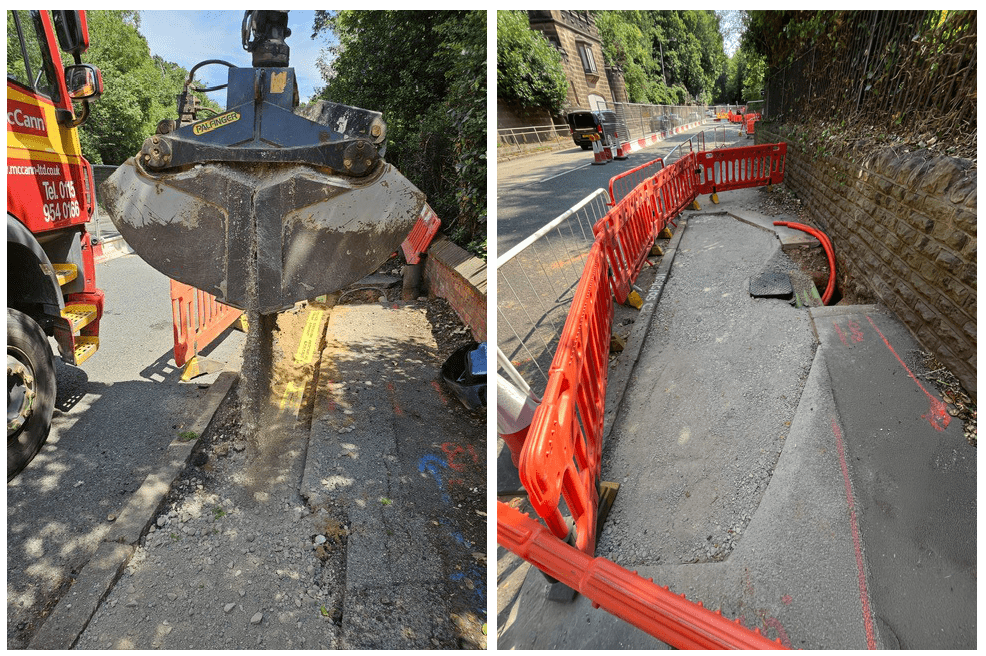
During the A52 Priory to QMC scheme, a total of 300tonnes of ReCO₂® was used. Using traditional higher-density Type 1 Aggregates, it’s estimated that this project would have used 20% more tonnes of material.
For this specific project, the ReCO₂® aggregate saves 16.81kg CO₂e per tonne compared to standard virgin aggregate products, when considering the A1-A4 (production, construction and transport stages) carbon values. With the additional 20% of material that would be needed if using virgin aggregate products, the project led to a carbon saving of 6,051kg CO₂e.
The equivalent of the carbon saving produced when planting 30 trees (200kg CO₂e saved per tree over the first 20 years of life).
Complementary to the carbon savings, the product performed exceptionally well in live conditions on this scheme. As reported by McCann Site Manager, Ryan Evans, “We’ve started using the material in small patches, but early feedback has been very positive. It’s easy to use, handles well, and compacts quickly and effectively. Even when laid in thinner, shallower layers, necessary due to the shallow ducts on our site, it performs well and knits together nicely, even in narrow strips. Best of all, we’ve not needed to change our existing construction processes to accommodate the different material.”
Strategic Alignment
The introduction of ReCO₂® supports National Highways’ broader Net Zero ambitions and contributes to the objectives outlined in their Net Zero Highways plan. The plan includes having Maintenance and Construction Emissions reach net zero by 2040. They reported that in 2020, emissions from the maintenance and construction of the network amounted to approximately 734,000 tonnes of CO₂e. To eliminate these emissions, they will focus on lean construction practices, the circular economy, and digital technologies to increase the capacity of the existing network while minimising new construction.
Using ReCO₂® on this scheme provides a live, scalable example of low-carbon material innovation in highway construction, showcasing that sustainability targets can be met without affecting programme, quality, or cost. This project sets a benchmark for future SDF schemes and demonstrates the value of contractor-led innovation in collaboration with trusted supply chain partners.
Speaking on the use of ReCO₂®, National Highways, Programme Delivery Manager, Matthew Carruthers, said, “As part of National Highways’ Net Zero Plan, it is important that carbon reduction is considered throughout the Development, Design and Construction of all our projects. Working with McCann as part of the A52 Priory to QMC scheme, is a great example of how our supply chain are thinking differently, by proposing low-carbon products such as ReCO₂®.”
The A52 Priory to QMC scheme represents more than just a highway improvement project; it’s a practical demonstration of how carbon reduction and construction quality can be delivered together. The successful implementation of ReCO₂® not only achieved environmental savings but also set a precedent for its wider use across the National Highways network. McCann’s role in introducing, installing and managing this innovation showcases the environmental commitment we have as a business.
Back to top