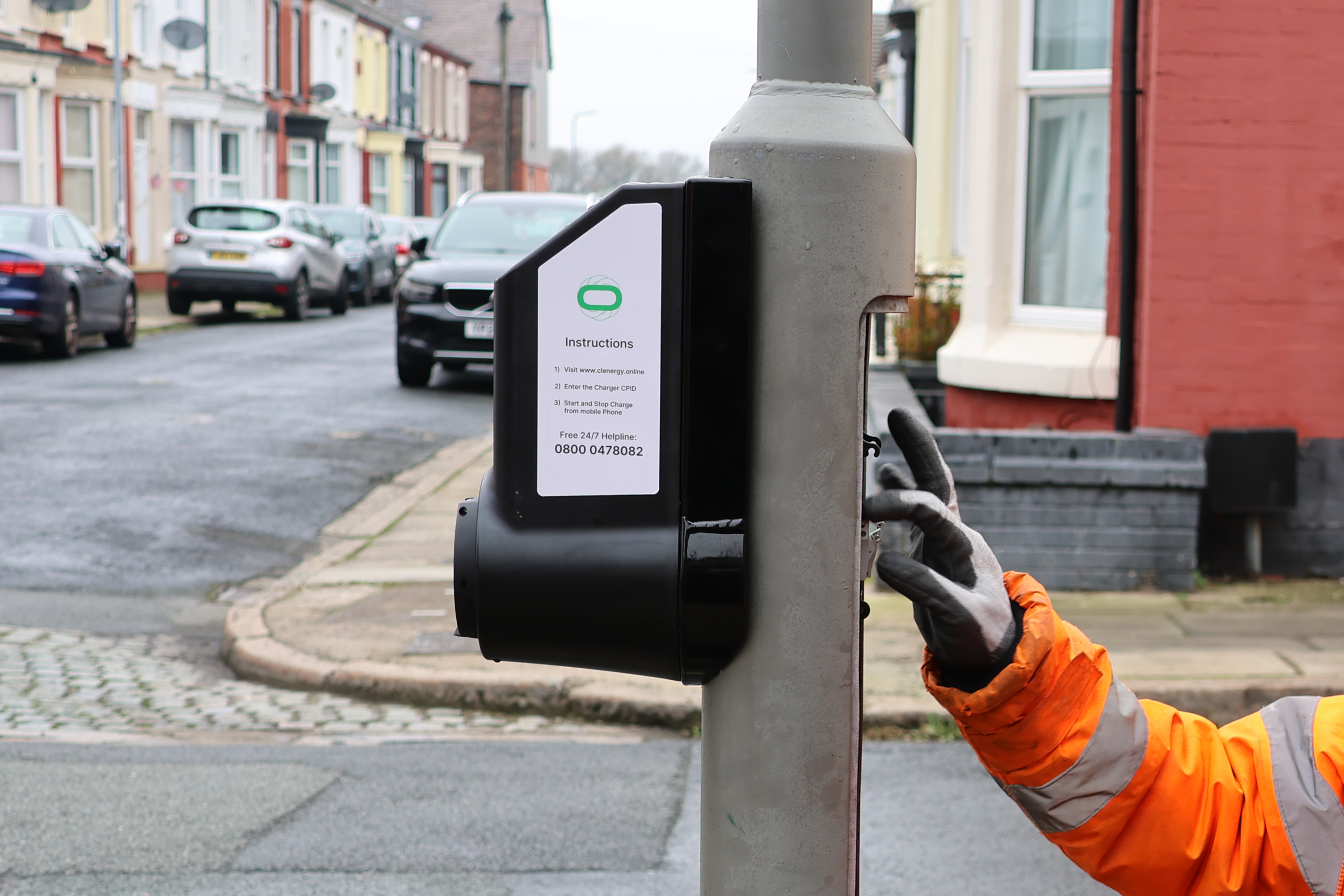
McCann delivers city-wide on-street Electric Vehicle Charging Point (EVCP) installation programme across Liverpool
McCann delivered a city-wide on-street Electric Vehicle Charging Point (EVCP) installation programme across Liverpool for Otaski, delivered by our Liverpool City Council (LCC) Street Lighting Maintenance Contract team. The works form one phase within Liverpool City Council’s wider EV infrastructure rollout aimed at expanding charging provision to a total of 2,000 chargers by May 2027 for residents across the city without access to off-street parking.
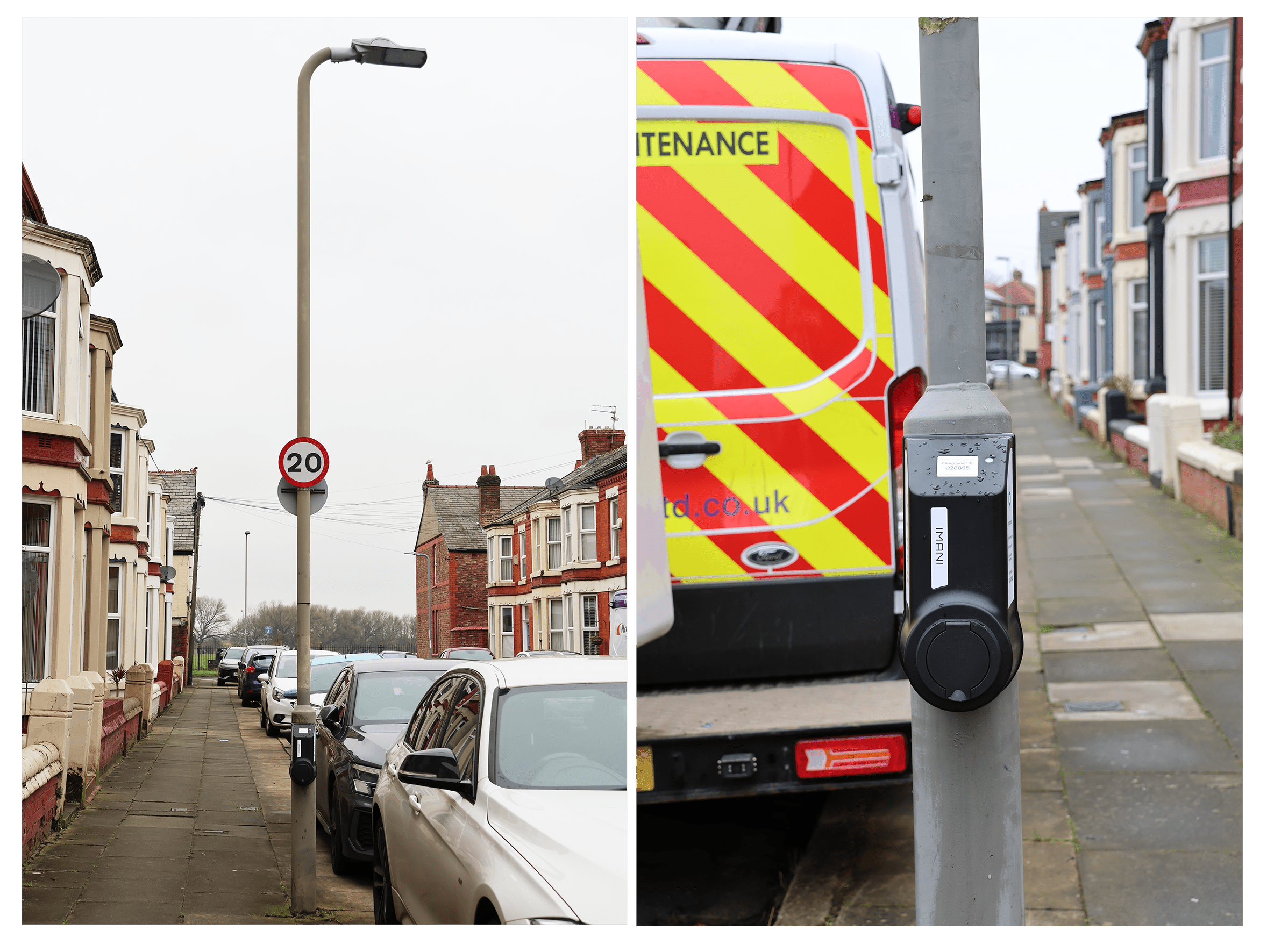
The scheme comprised the installation of approximately 300 column-mounted EV charge points across more than 130 residential streets and was required to be completed within a fixed funding window, completing the project in just over a month.
Across the UK, electric vehicle uptake continues to rise, driven by the Government’s goal to achieve Net Zero by 2050. For Liverpool, which set its target for the Liverpool City Council to become net zero carbon by 2035, expanding accessible EV charging infrastructure is a key enabler of this transition, particularly in residential areas where off-street charging is not available at home. The scheme supports this increasing adoption of EVs by providing reliable, strategically located charging points that accommodate growth in electric vehicle usage among residents. The project was delivered under the On-Street Residential Chargepoint Scheme (ORCS), funded by the UK Government’s Office for Zero Emissions Vehicles, which supports the rollout of EV infrastructure for residents without private parking.
Technical Scope
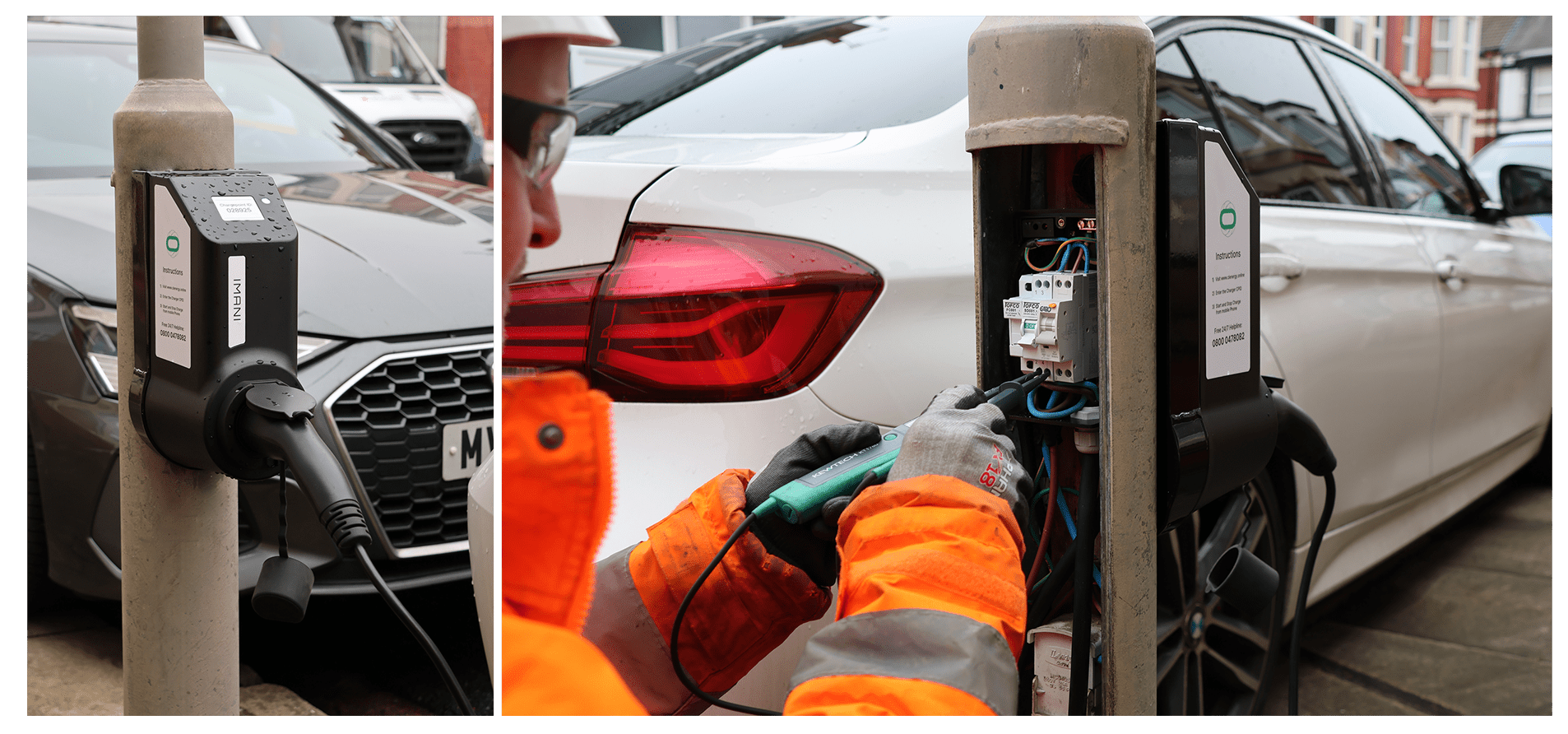
The works involved the modification of existing street lighting assets to accommodate integrated EV charging infrastructure. This included the removal of existing lamp column control gear, internal reconfiguration of column space, and the installation of column-mounted EV chargers supplied by multiple manufacturers.
Each installation comprised a double-pole isolator, RCD protection, fusing, and associated power and control cabling to enable safe integration of the EVCP into the existing electrical network within the column. Internal wiring layouts were adapted to suit column constraints while maintaining compliance with current electrical standards.
All chargers were tested and commissioned using specialist EV test equipment, including Megger MFTX1 and EVX100, to verify electrical safety, continuity, insulation resistance, and operational performance before handover.
Planning and Delivery
Street locations were proposed by Liverpool City Council following requests from residents in areas that had no off-street parking. McCann then performed on-site feasibility surveys to confirm suitability against:
- Column type, condition, and structural integrity (including door aperture, wall thickness, corrosion) and location at the front of the footway.
- Electrical suitability (supply availability, fuse ratings, cut-out condition, earthing/PEN protection approach).
- Civils/access (footway condition, congestion, proximity to hazards/utilities, compliance with NRSWA).
- Service avoidance (CAT & Genny and records review before any intrusive works).
Once all sites were approved by Otaski and Liverpool City Council, installation commenced.
McCann coordinated closely with Otaski, Liverpool City Council, and specialist suppliers, including TOFCO (cutouts), evpzee and Ratio (EV charging units), and Clenergy EV, whose software platform provides charger activation and payment functionality. Commissioning activities were aligned with system adoption onto the Clenergy EV network, which was a critical path activity for final energisation.
Engineering Challenges and Lessons Learned
As this was the first deployment of these EVCP units by McCann, several design and installation challenges were identified during delivery. These included over-length fixing bolts requiring on-site modification, cable entry positions that constrained usable internal column space, and redundant data cabling that increased drilling and installation time without providing operational benefit.
The presence of two different charger designs across the scheme also impacted productivity rates, particularly during early phases. These findings were documented and fed back to manufacturers and project partners to inform design improvements and installation efficiencies on future EVCP programmes.
Health, Safety and Compliance
All works were completed in accordance with street works permits, traffic management conditions, and public-safety requirements specified by Liverpool City Council. Appropriate barriers and exclusion zones were established around lamp columns during installation. No accidents, incidents, or post-installation defects were recorded.
Stephen Rimmer, Highways Portfolio Manager for Liverpool City Council, commented, “McCann has delivered an excellent standard of work on this phase of our on-street EV charging rollout. The integration of charging infrastructure into existing street lighting assets across a wide range of residential locations is a complex undertaking, and the team has demonstrated a high level of technical expertise and attention to detail throughout.
Their collaborative and solutions-focused approach has been particularly valuable, working closely with the Council and Otaski to overcome challenges and ensure a consistent, high-quality outcome. The installations have been completed safely, with minimal disruption to residents, and to a standard that gives us confidence in the long-term reliability of the infrastructure.
This programme represents an important step in expanding access to EV charging for residents without off-street parking and supports our wider ambitions to reduce carbon emissions across the city. McCann has proven to be a professional, capable, and dependable delivery partner, and we look forward to continuing our work together as the rollout progresses.”
Despite programme constraints driven by funding deadlines, the scheme was delivered within the agreed timescale and budget. The successful installation and commissioning of 300 EV charge points provide a scalable technical model for future on-street EVCP installations and strengthen McCann’s capability in the delivery of complex, asset-integrated EV infrastructure projects.
Back to top