McCann delivers critical water infrastructure under live railway and through a protected SSSI
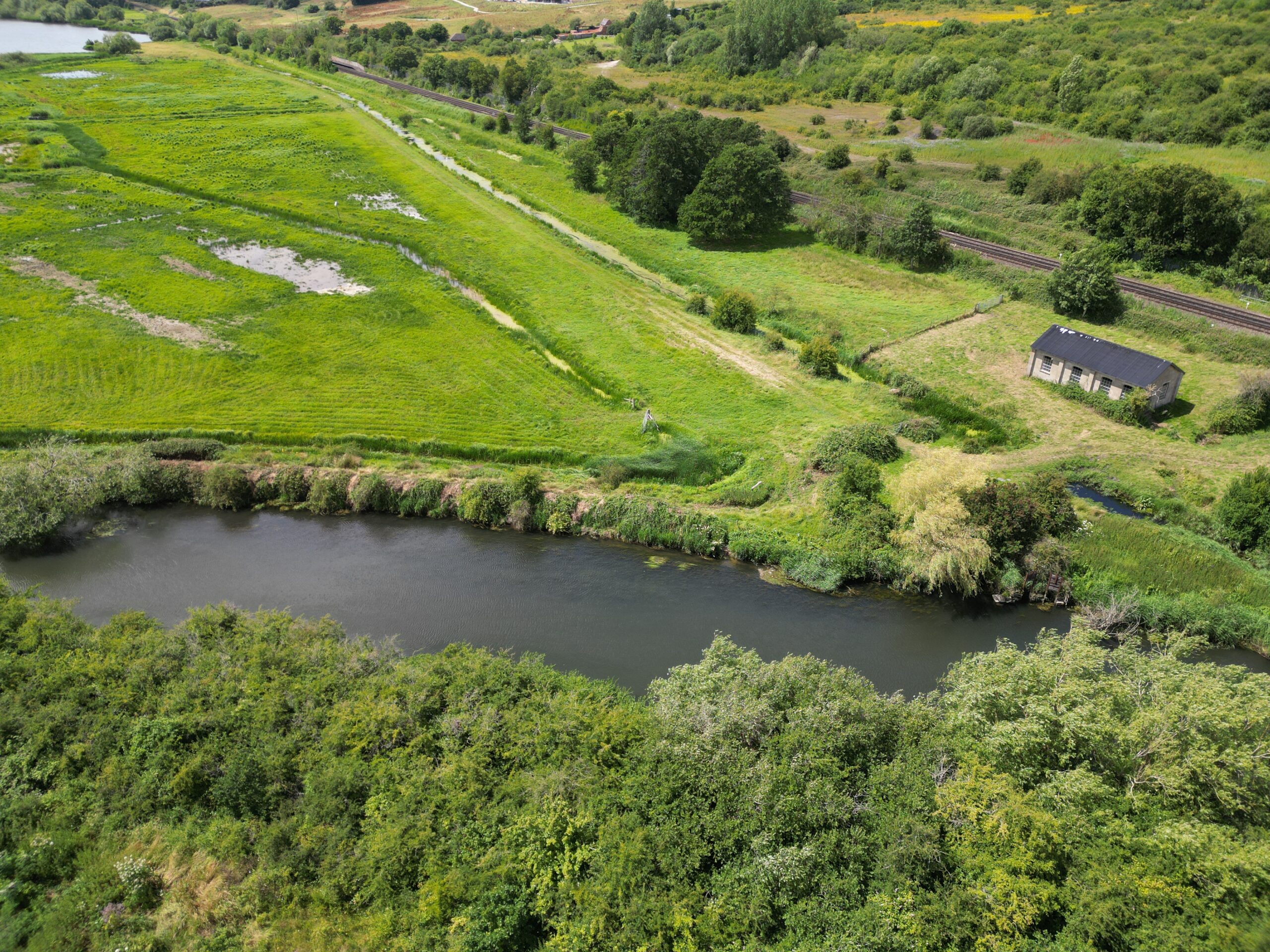
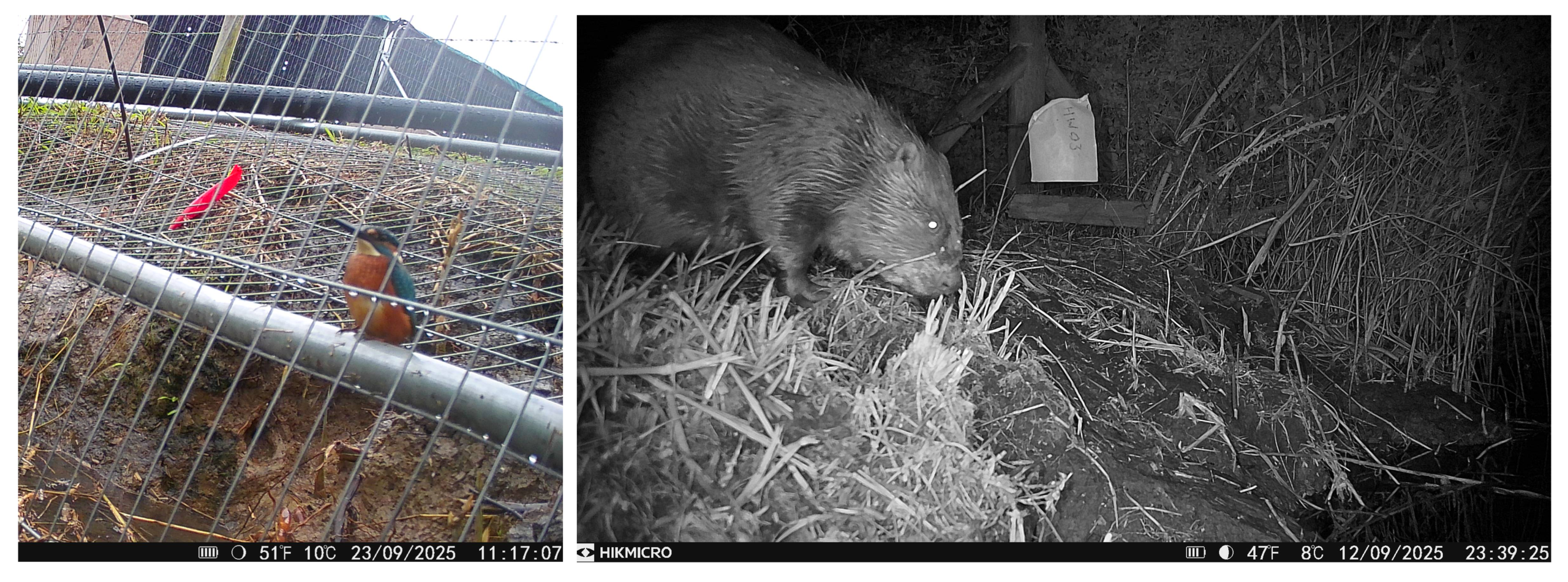
Selcon, working on behalf of Severn Trent Connect, appointed McCann as Principal Contractor to deliver a highly challenging pumped rising main installation underneath an operational railway line and through one of the most environmentally sensitive sites in the UK, Stodmarsh SSSI (Site of Special Scientific Interest), connected to a newly constructed headwall within the river. These works were delivered under stringent seasonal, ecological, and logistical constraints to maintain full rail operations and protect Stodmarsh SSSI, which is home to migratory birds, beavers, water voles, and rare invertebrates.
Completed in November 2025, the project allows the connection of the pumped treated water from the Washout Chamber to the headwall in the natural watercourse. It forms part of the wider delivery of a new, innovative Wastewater Treatment Works (WwTW), at Redrow’s “The Hoplands” site, by Severn Trent Connect. The WwTW is designed specifically to meet the needs of the development, operating discreetly while delivering reliable, high-quality wastewater treatment. It will generate surplus transferable nutrient credits for Redrow and, in turn, provide residents with reduced wastewater utility bills and dedicated maintenance of public wastewater drainage at the site.
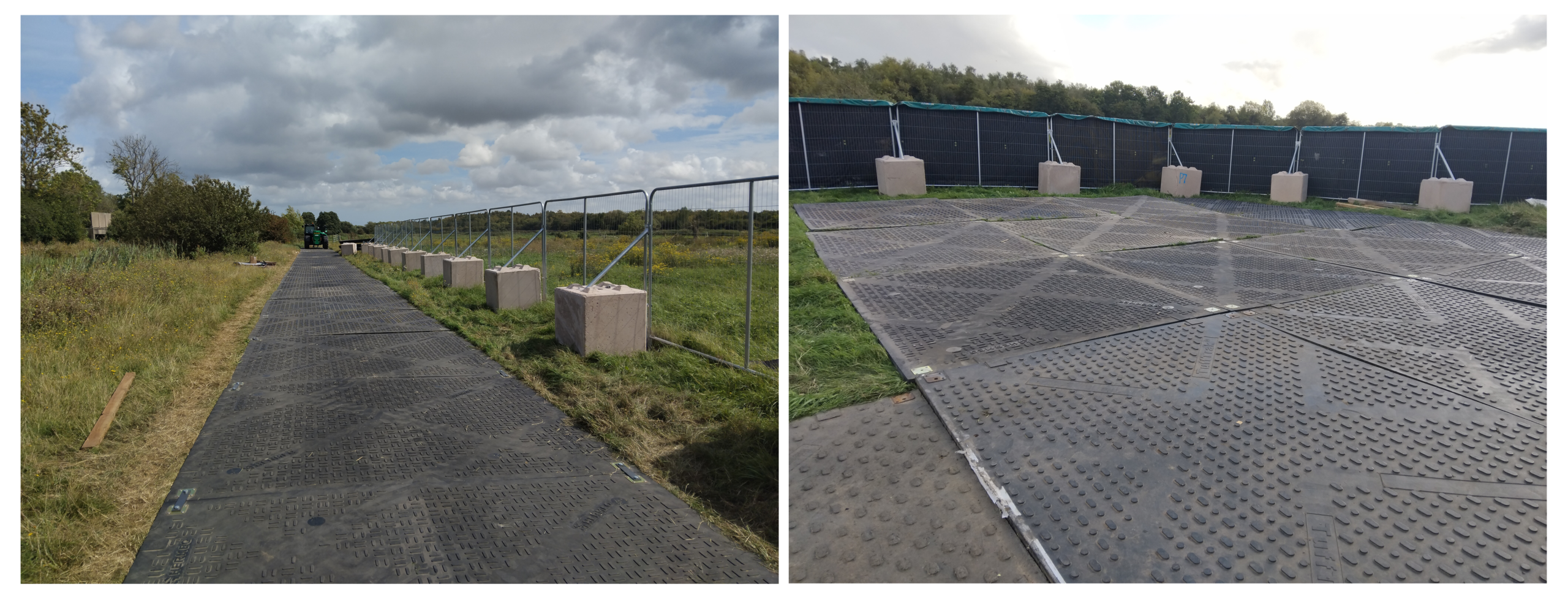
During the mobilisation process, our team installed 550m of track mats, fencing and acoustic barriers to protect the surrounding site from any disruption during the construction phase, including reducing the noise pollution from the works. The main delivery of this project involved two key parts: the pumped rising main installation and the cofferdam and headwall construction, both of which required specialised construction methods.
Rising Main Installation
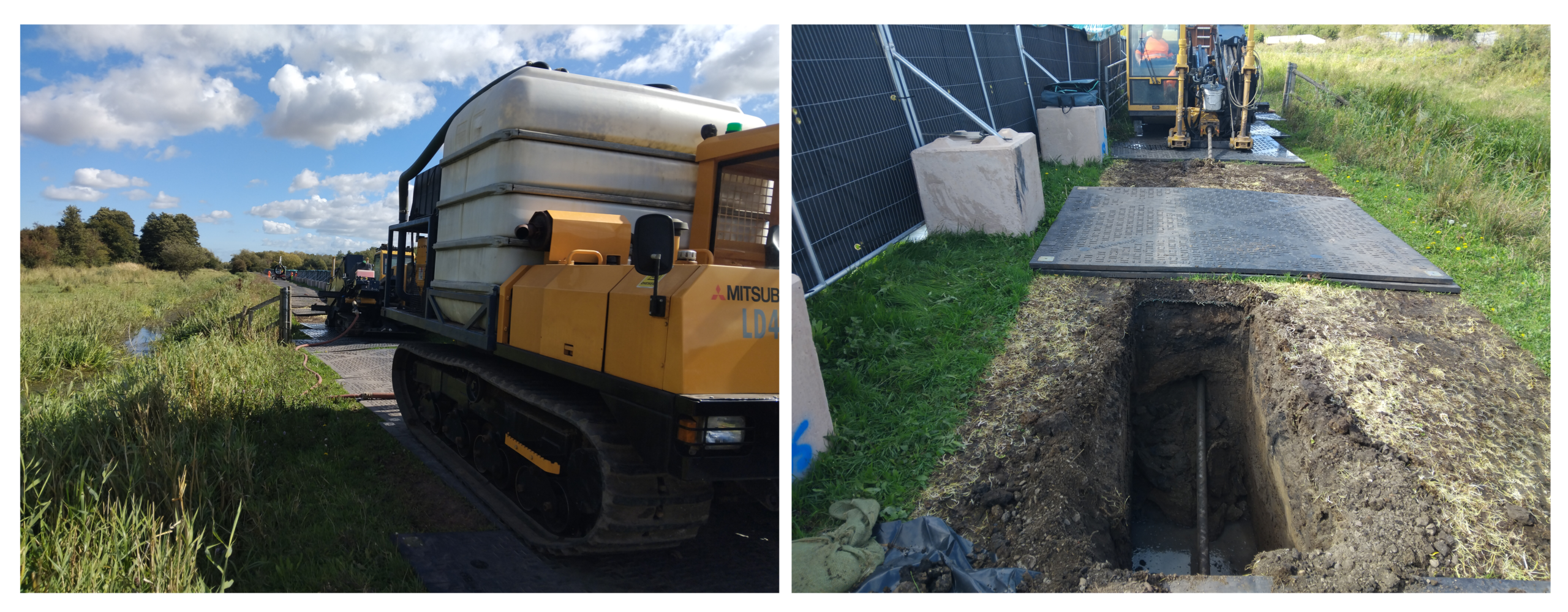
To reach the river connection point, the team installed a 600metre 63mm diameter rising main using directional drilling. Directional drilling is a specialised technique that creates non-vertical boreholes, allowing the drill path to be precisely controlled and steered to a specific underground target. It provides minimal damage to the surface ground, in this case, the Railway Line and the Stodmarsh SSSI, and is not as invasive as conventional methods.
Using a specialist drilling rig and a 9-tonne dumper with a water tank attached, the team drilled a pilot borehole following the route to the headwall, then expanded the hole along the trajectory established by the pilot bore. The pipe was then pulled back through the passage. Due to length restrictions, our team excavated launch pits roughly every 90 metres to allow for fusion welding to join the pipe together to achieve the full 600 metre length.
To reach the headwall, directional drilling was required beneath an operational railway line at a depth of approximately seven metres. All activities had to be coordinated directly with Network Rail through a liaison partner, and any crossing of the track with plant and materials had to be timed with the signal master, as the railway remained live with trains passing the crossing every 10-15 minutes. Network Rail had a specialist track response team monitor the railway line a week before, during, and with a tapered inspection regime continuing for four weeks after the drilling. No track movement was detected, and no service disruptions occurred.
Cofferdam and Headwall Construction
When McCann assumed delivery after a previous contractor withdrew, early collaboration revealed inaccuracies in earlier surveys, especially riverbed levels. This required a significant redesign of the cofferdam and headwall solution before construction could proceed.
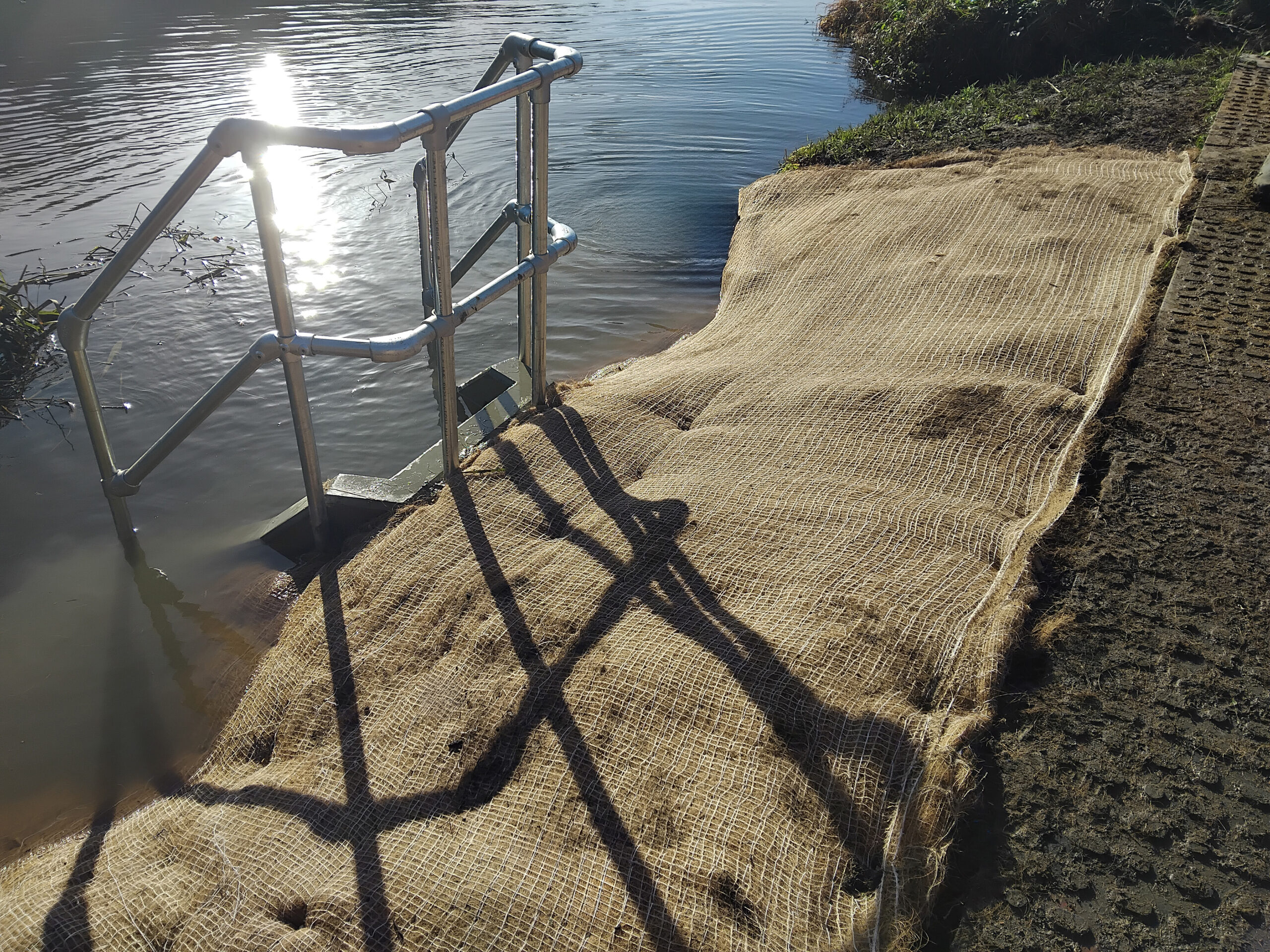
After inaccuracies were identified in the original design, a revised cofferdam solution was developed and submitted for approval by the Environmental Agency. This involved driving 20-foot scaffold tubes into the riverbed using a 13-tonne excavator to form a curved structure projecting from the bank. A double-layer lining system was attached inside and out to create a watertight enclosure, supported by sandbags and a pumped sump.
Dewatering was handled through a closed-loop system, where river water was pumped into a Siltbuster, passed through a pH converter, then rechecked and discharged slowly onto the Stodmarsh field through a silt blanket. This ensured no contaminated or chemically altered water entered the river system.
Once the cofferdam was stabilised and the working area largely dry, the area was excavated for the new headwall, a reinforced concrete base was built, the headwall toe installed and fixed into position. At this point, the rising main, installed via directional drilling across the SSSI, was connected directly into the headwall.
Environmental and Logistical Challenges
From the outset, there were extreme logistical challenges due to the environmentally sensitive site. This project could only take place between summer and autumn, due to the birds stopping at the site before their winter migration. This meant that our programme of works had to be extremely accurate with little margin for delay, requiring meticulous planning, precise sequencing, and close coordination across all contractors to ensure the works were completed within the narrow seasonal window while fully respecting the site’s environmental constraints.
Alongside the narrow window, the SSSI environment imposed daily constraints. An ecologist attended the site every day, conducting bird counts and monitoring species presence. Work had to stop immediately if more than ten swans were present on the water, and machinery had to be shut down by around 3:30pm after the clocks changed to avoid disturbing roosting birds. Refuelling was prohibited on site. All soils were segregated on protective sheeting and had to be returned exactly as found. Every element of the works was closely monitored and recorded.
Weather and seasonal pressures shaped much of the programme. Due to the redesign of the cofferdam, there was a slight delay in programming whilst a solution was approved, which meant that the works entered November. The high tides and heavy rain caused track mats to float from their original positions. Although these conditions made late-season work difficult, the client chose to continue rather than delay into the following year, which would have required full demobilisation and the costly re-establishment of access, fencing, and acoustic barriers. McCann worked proactively with the ecologist to remove unneeded barriers earlier than planned, recovering programme time while staying within environmental limits.
Access was a constant challenge. The compound was nearly a mile from the works area, reachable only via narrow lanes, with final access available only through a neighbouring orchard. All materials had to be transported using 7-tonne trucks, and frequent crossings of the railway line required minute-by-minute coordination. The site team maintained regular, proactive communication with nearby residents, which helped to rebuild trust after poor communication by previous contractors. In one example of stakeholder engagement, the team used site-lifting equipment to help a neighbouring household install a large chandelier, a gesture that significantly improved relations and reinforced goodwill.
Throughout the scheme, communication was essential. With no mobile signal on site, the team relied entirely on radios. The daily briefings on site included the ecologist, site teams, and subcontractors to review the previous day’s findings and agree on a detailed plan for the next.
Delivery of Complex Infrastructure
Despite significant constraints, challenging logistics and complex environmental requirements, the Hoplands Rising Main project was delivered to a high technical standard and without accidents, public safety incidents or environmental breaches. The collaboration between all stakeholders, contractors and subcontractors contributed significantly to the project’s exceptional safety and environmental performance. As Michael Nicholson, Contracts Manager at McCann, highlighted, “while meticulous planning and coordination were essential, it was the strong day-to-day leadership on site by Padraig Shevlin, Project Manager, and Richard Woodland, Project Supervisor, complemented by the effective commercial management and client liaison delivered by Sarah Wardle, Senior Quantity Surveyor, that proved instrumental to the project’s success.”
The successful completion not only enables the wider WwTW to operate as intended but also protects a nationally important habitat while providing long-term environmental and community benefits. This project stands as a clear example of McCann’s capacity to deliver complex, high-risk infrastructure where environmental stewardship, stakeholder confidence and operational continuity are non-negotiable.
Back to top