
Street Lighting, Signs and Technology –
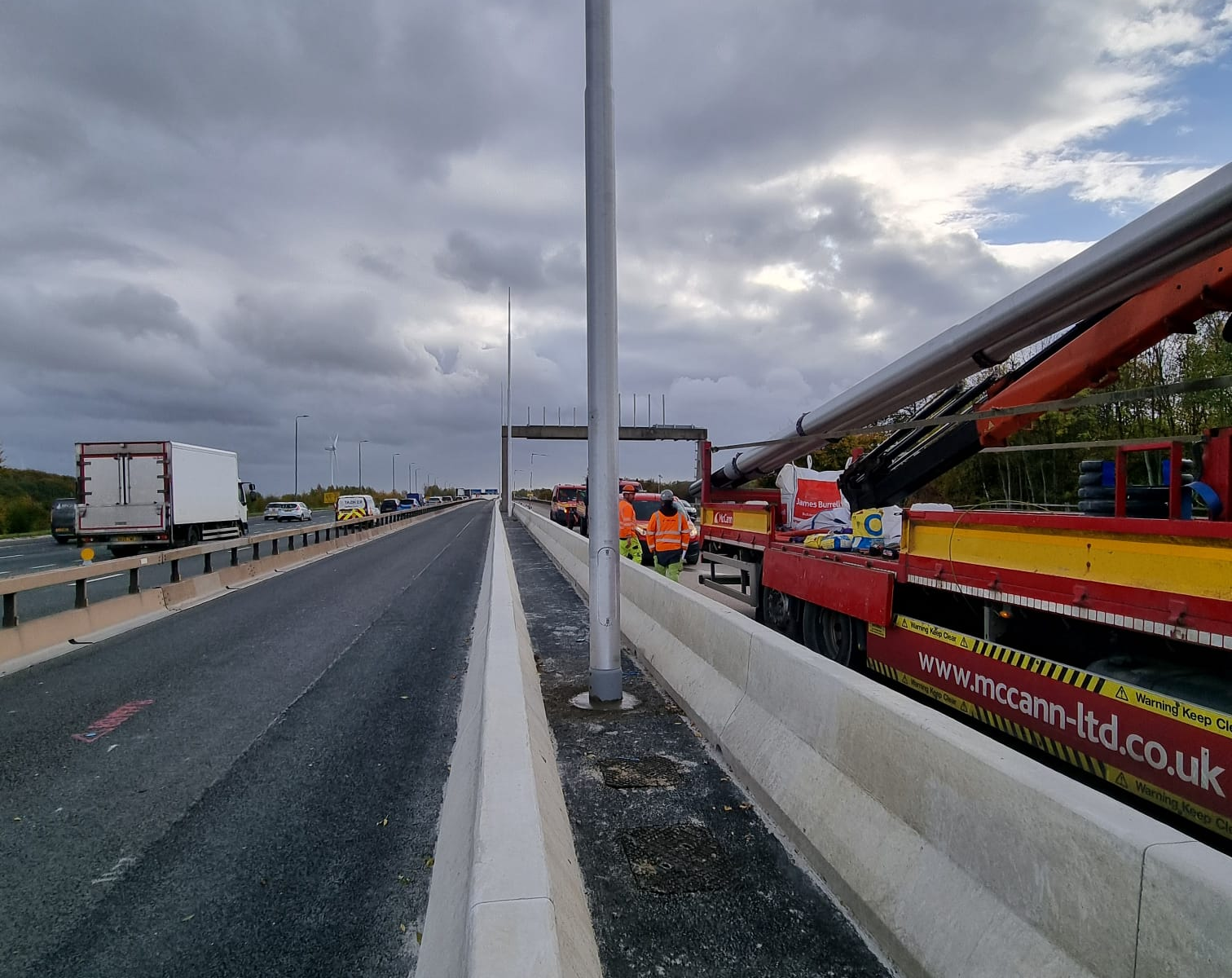
- 468 x lighting columns and lanterns
- 57,541m x Trenching, Cabling and Ducting
- 521 x terminations, jointing and earthing
- 315 x chambers
- 45 x feeder pillars
- 40 x Signage
- 1x ERT Telephone
- 10 x matrix indicators
- 1x CCTV
- 4 x MIDAS loop sets
- 2x VMS signs
Civils –
- 130m x paving
- 35m concrete slab
- Pedestrian handrail
Early Engagement Driving Project Success
McCann engaged from the early contractor involvement (ECI) stage, working collaboratively with the client and designers during surveys, design development and construction. Early engagement helped to de-risk the programme by identifying potential issues, undertaking electrical and site surveys, reviewing interim design drawings and implementing design improvements before construction commenced.
On Scheme 5, McCann worked closely with Atkins and Balfour Beatty throughout the design process, helping to meet tight funding timescales for the Design-Build-Finance-Operate (DBFO) model while ensuring the designs remained practical and buildable. A key example of this collaborative approach was the evolution of the column foundation design, where McCann proposed replacing reinforced concrete foundations with piled foundations. This change reduced operational disruption, shortened installation times and delivered cost efficiencies. To further de-risk the programme, McCann also established supply chain agreements for long lead-time materials, including cabling and lighting columns. Procuring and securing these materials in advance mitigated the impact of price increases, reduced supply chain risk, and ensured critical components, such as lighting columns with 14-week lead times, were available to maintain the construction programme and support timely project completion.
Learning Through Delivery
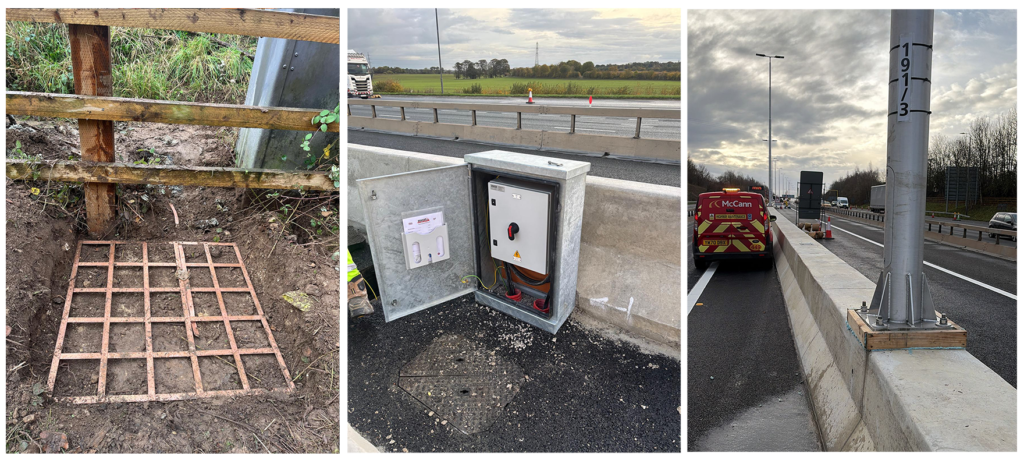
A key learning point from the project was to develop proposals that catered for multiple eventualities prior to work starting. Close collaboration with Balfour Beatty across all the schemes built trust and demonstrated our ability to provide robust alternative options. Agreeing the use of the earth mats at an early stage helped de-risk the installation uncertainty around the installation of earth electrode rods, allowing the delivery of the project to proceed when finding locations that required the use of earth mats, without waiting for the individual approval which would have delayed installation.
This collaborative approach ensured flexibility throughout the projects, for Scheme 3 the earth mats were delivered as a Compensation Event (CE), while Schemes 4 and 5 were included within the original bill due to the learnings of the previous schemes, enabling efficient progression regardless of the final project outcomes.
Innovation and Value Engineering
One of the most significant value engineering initiatives was implemented on Scheme 4, where the construction sequence was revised following lessons learned from previous schemes. Damage to chambers, ducts, and column foundations caused by subsequent construction activities had resulted in avoidable repair works. To address this, McCann proposed installing the binder course before the technology works, enabling narrow trenches to be cut using a Rock Wheel rather than excavating through the completed pavement. This approach reduced the repair requirements that previous schemes needed and delivered a significant cost saving while ensuring the programme delivery.
McCann also undertook comprehensive surveys of all feeder pillars before any modification works commenced. By identifying and rectifying existing defects during the ECI phase, the team prevented Balfour Beatty from inheriting pre-existing asset issues, reducing the likelihood of unforeseen delays and additional costs during delivery.
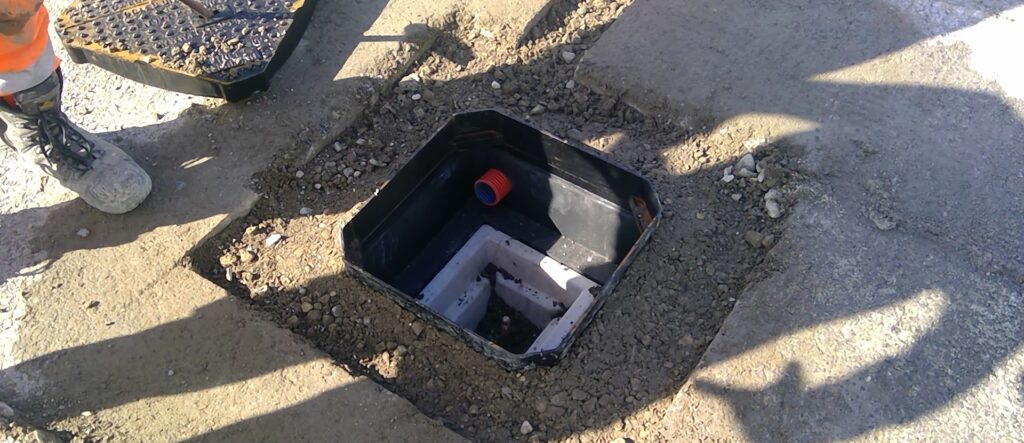
Lessons learned from the early schemes were continuously fed back into the design and construction process. A review of the concrete earth rod chamber and earth inspection pit chamber design identified an opportunity to simplify construction. Working jointly with Balfour Beatty and Atkins, McCann helped revise the standard detail to reduce the inspection chamber depth. This innovation proved particularly beneficial in the site’s challenging ground conditions, reducing the excavation from four layers to a single layer of the chamber, improving productivity, shortening installation time, and delivering further cost efficiencies.
By embedding continuous improvement throughout the project, McCann transformed lessons learned from earlier schemes into practical engineering solutions that enhanced safety, reduced programme and cost risk, and delivered measurable value to the client.
Safety Excellence and Sustainable Delivery
To date, Health and Safety on site has been exemplary, with no incidents or accidents across all the schemes. McCann operatives consistently demonstrated an outstanding commitment to safe working practices, earning several monthly Safety Awards from Balfour Beatty in recognition of their performance.
Alongside this strong safety culture, the project team implemented sustainable initiatives to reduce both environmental impact and costs. A 6m long plant trailer was trialled to transport ducting, eliminating the need for an HGV resource and reducing wagon movements on site for approximately six weeks, delivering both carbon and cost savings. Existing lanterns were carefully removed, stored, tested and reused within the permanent works across all schemes. This resulted in approximately 90% of lanterns being successfully reused, while any tested spare lanterns were returned to the local maintenance team for future use. These measures significantly reduced waste, lowered the environmental impact of the works and supported the principles of a circular economy.
Collaboration at the Heart of Delivery
Throughout the five schemes, collaboration has been the key to successful project delivery. Working within the same site office as delivery partners Balfour Beatty, Atkins and other supply chain members created a truly collaborative environment. Everyone felt like they were working for the same goal, with resources shared when assistance was needed, problems could be communicated clearly and immediately, and trust was built over the duration of the schemes.
Rob Hunter, Construction Manager at Balfour Beatty, commented, “Early engagement and a high level of collaboration have built strong trust between us as both client and delivery partner. This trust is reciprocated across the entire team, right through to the personnel on the ground. From this foundation, we have enabled McCann to deliver their programme in alignment with ours, with support flowing both ways whenever resource challenges on our or other projects require adjustments.
At the core of the success has been the willingness to be collaborative, engage with and become part of the team and community we’ve built as we have delivered our project.
Engagement in the development of our innovations through schemes 3 and 4 (Trencher/Rock wheel) has been a game-changer for the project and showcases McCann’s commitment to continuous improvement. I look forward to working with this team and McCann on future projects.”
Successful Multi-Scheme Delivery
The successful delivery of these five schemes demonstrates McCann’s ability to provide safe, collaborative and innovative infrastructure solutions on complex strategic highway projects. Through early contractor involvement, proactive value engineering and a commitment to continuous improvement, McCann consistently identified opportunities to reduce programme risk, improve installation and deliver measurable cost efficiencies, while maintaining the highest standards of quality and safety.
The knowledge gained from each scheme was embedded into subsequent schemes, enabling the team to refine designs, improve construction methods and enhance overall project performance. Combined with a strong culture of collaboration between McCann, Balfour Beatty, Atkins and the wider supply chain, this approach ensured the successful delivery of works that will provide lasting safety benefits for one of Yorkshire’s busiest motorway corridors.
With an exemplary health and safety record, sustainable construction practices and a shared commitment to innovation, the project has strengthened McCann’s long-standing relationship with Balfour Beatty and reinforced its reputation as a trusted delivery partner for major highway infrastructure programmes. The completed works leave a lasting legacy of improved road user safety, increased network resilience and a collaborative delivery model that can be replicated on future projects.